What Causes the Wall to Split
Concrete is rigid. When the soil beneath it shifts, the foundation cannot bend, so it breaks. In Tallahassee, seasonal rainfall and drought are the main drivers of hydrostatic pressure and soil movement around homes. When the ground gets saturated, it swells and pushes against your foundation walls. When a drought hits, that same soil shrinks away, leaving the concrete unsupported.
We also see a lot of man-made issues contributing to this cycle. Improper grading and bad gutters can cause excessive moisture buildup near a foundation, leading to severe soil saturation problems. That trapped water creates immense pressure. Add in the constant humidity load that stresses building envelopes around here, and your foundation is fighting a constant battle. That is why our concrete foundation repair process always starts with looking at where the water is going before we ever look at the crack itself.
Reading the Fractures
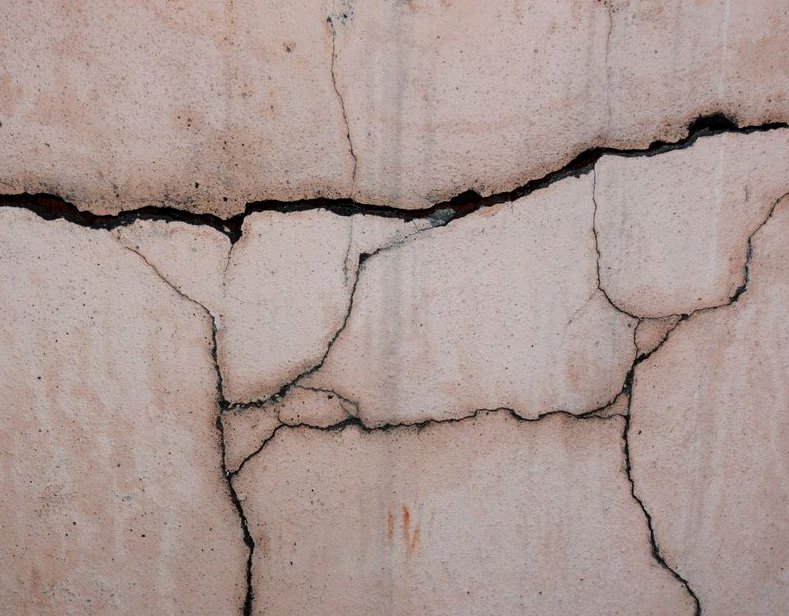
Not all cracks mean your house is falling down. Hairline vertical cracks often happen right after a house is built just from the concrete curing. But when we see horizontal cracks, or cracks wider at the top than the bottom, we know the foundation is actively settling or bowing. Our crew looks at the whole picture. We check the grading, inspect the downspouts, and measure the floors inside to see how far things have dropped.
We do not just patch the crack and walk away. Slapping mortar over a structural failure is a waste of your money. True concrete repair services require stabilizing the structure first. If the soil is failing to hold the house up, we have to bypass that bad soil and anchor the home to something solid. That means bringing in heavy steel.
Driving Steel to Solid Ground
When a foundation needs to be permanently stabilized, we use helical piers. For most residential foundation crack repair jobs, we drive a helical pier with a 6-inch lead helix plate deep into the earth. The helix acts like a giant screw, pulling the pier down through the weak, saturated topsoil until it hits load-bearing strata. If we are dealing with lighter structural loads, like a settling porch or a small addition, we might use a round-shaft helical anchor instead.
We do not guess when the pier is deep enough. Our crew logs the torque-to-capacity correlation on every single helical pier install. The installation motor tells us exactly how much resistance the steel is meeting in the ground. When that torque reading matches the weight of your house, we know the pier can support the foundation. Only then do we attach the steel bracket to your footing.
The Lift and the Patch
Once the piers are driven and bracketed to the foundation, we can often lift the settled section of the house back toward its original position. We use hydraulic jacks to carefully raise the footing. This is a slow, controlled process. We record the hydraulic ram lift in 0.1-inch increments, watching the structure react to every adjustment. As the house comes up, you can often see the cracks in the brickwork or block walls close back together.
After the lift is complete and the weight of the house is permanently transferred to the steel piers, we address the cosmetic damage. We seal the cracks to keep out moisture and pests. Because the foundation is now resting on deep steel rather than shifting surface soil, those cracks will not reopen the next time Tallahassee gets a heavy rainstorm.
What Foundation Stabilization Costs
The cost of fixing a cracked foundation depends entirely on how much steel we have to put in the ground. We price this work based on the number of support points your house needs. For our installations, you can expect to pay $2500 to $3500 per helical pier installed.
A small corner settlement might only need two or three piers. A whole wall that has dropped could require six or more, spaced at specific intervals to properly distribute the weight. When we come out to inspect your property, we will map out exactly how many piers are required to permanently stabilize the structure. We give you a firm price for the complete job, including the excavation, the steel, the lift, and the final cleanup.
Tallahassee Conditions That Matter
What working in Tallahassee actually means for the job:
Climate
- Annual heating degree days (base 65 °F): 1473. NOAA Climate Normals 1991–2020.
- humidity load that stresses building envelopes
- Freeze risk: low — relevant to freeze/thaw foundation stress.
- Hurricane/storm exposure: medium.
Soil & Ground
- EPA radon zone: 3 (soil-gas indicator).
- Secondary soil series: Alpin (S). Excessively drained. Source: USDA NRCS Web Soil Survey.
Local Notes
- Median home value $276,000. Source: U.S. Census ACS.
- Housing tenure: 40% owner-occupied, 60% renter-occupied. Source: U.S. Census ACS.
- Median household income $55,931. Source: U.S. Census ACS.
- Serving Tallahassee, FL and surrounding communities.
What the Work Involves
A visual look at what the service involves.
From First Call to Finished Job
-
Reach Out
Tell us what you're seeing and when it started — you'll get a straight answer, not a sales pitch.
-
On-Site Inspection
A tech inspects the problem in person — no guessing from photos, no drive-by quotes.
-
Know the Price First
We put the fix, the timeline, and the number on paper — take your time with it.
Depending on what we find, that can mean:
- Push piers driven in sequence to refusal on a load-bearing stratum
- Torque-to-capacity correlation logged on every helical pier install
What It Typically Costs
Typical ranges, not a fixed price - the exact number is confirmed in writing before work starts.
$300–$600
$2200–$8100
Frequently Asked Questions
What causes foundation settling in Tallahassee?
In Tallahassee, settling comes down to the local ground conditions: EPA radon zone: 3 (soil-gas indicator). Dominant soil: Foxworth (S). Moderately well drained. Source: USDA NRCS Web Soil Survey.
Why have my doors and windows started sticking?
When a foundation settles unevenly, the frame of the house racks slightly out of square, which binds doors and windows. It is one of the earliest noticeable symptoms of movement.
Can foundation problems wait, or are they urgent?
Foundation movement rarely stops on its own and usually worsens with each wet-dry cycle, so delaying tends to raise the eventual cost. An early inspection keeps options open and repairs at the lower end of the range.
Will fixing my foundation stop water in the basement?
Structural repair and water control are related but separate. Sealing cracks helps, but persistent basement water usually also needs drainage measures such as interior drain tile and a sump system.
What happens during a foundation repair estimate?
A proper estimate includes a walk-through of the symptoms, a manometer or elevation survey, and a review of soil and drainage conditions, followed by a written scope with pier count, method, and price. Be cautious of any quote given without measuring the differential.
What time of year is best for foundation repair?
Late spring, summer, or early fall are ideal because warm, dry weather helps concrete cure and soil dry out. Avoid rainy or freezing periods, as moisture and frost can affect the repair materials and settling. Plan when the forecast shows stable conditions for several days.
Will homeowners insurance cover foundation repair?
Most standard policies exclude foundation damage from settling, earth movement, or wear and tear. Coverage may apply only if a sudden, accidental event (e.g., burst pipe or fire) caused the damage. Review your policy and ask your insurer; you may need separate earth movement coverage.
Other Things People Ask
How much does foundation repair cost?
Nationally, most foundation repairs run between about $2,200 and $8,100, with an average near $5,100. A single push pier typically runs $1,500 to $2,500 and most homes need several, so larger pier projects reach the higher end.
Is foundation repair covered by homeowner's insurance?
A sudden structural event from a covered peril may be covered, but gradual settling from soil movement usually is not. Keep your inspection report and repair documentation for your adjuster.
Can I sell my home after foundation repair?
Yes. A documented, warranted repair usually reassures buyers far more than unexplained sloping floors. Most contractors provide a transferable warranty letter suitable for closing disclosure.
What warranty comes with pier installation?
Quality steel push-pier and helical-pier installations typically carry a lifetime, transferable structural warranty covering vertical movement at the pier locations. The exact terms depend on the soil report, so review them before signing.
What happens if the foundation settles again after repair?
Warranted pier locations are re-leveled at no charge if movement exceeds the tolerance stated in the warranty. Movement outside the repaired footprint is evaluated case by case.
Areas We Serve
Serving Tallahassee, FL. Call (448) 666-7478 to confirm coverage for your address.
Other Services We Offer
Why Tallahassee Homeowners Call
Need help today? Call (448) 666-7478.